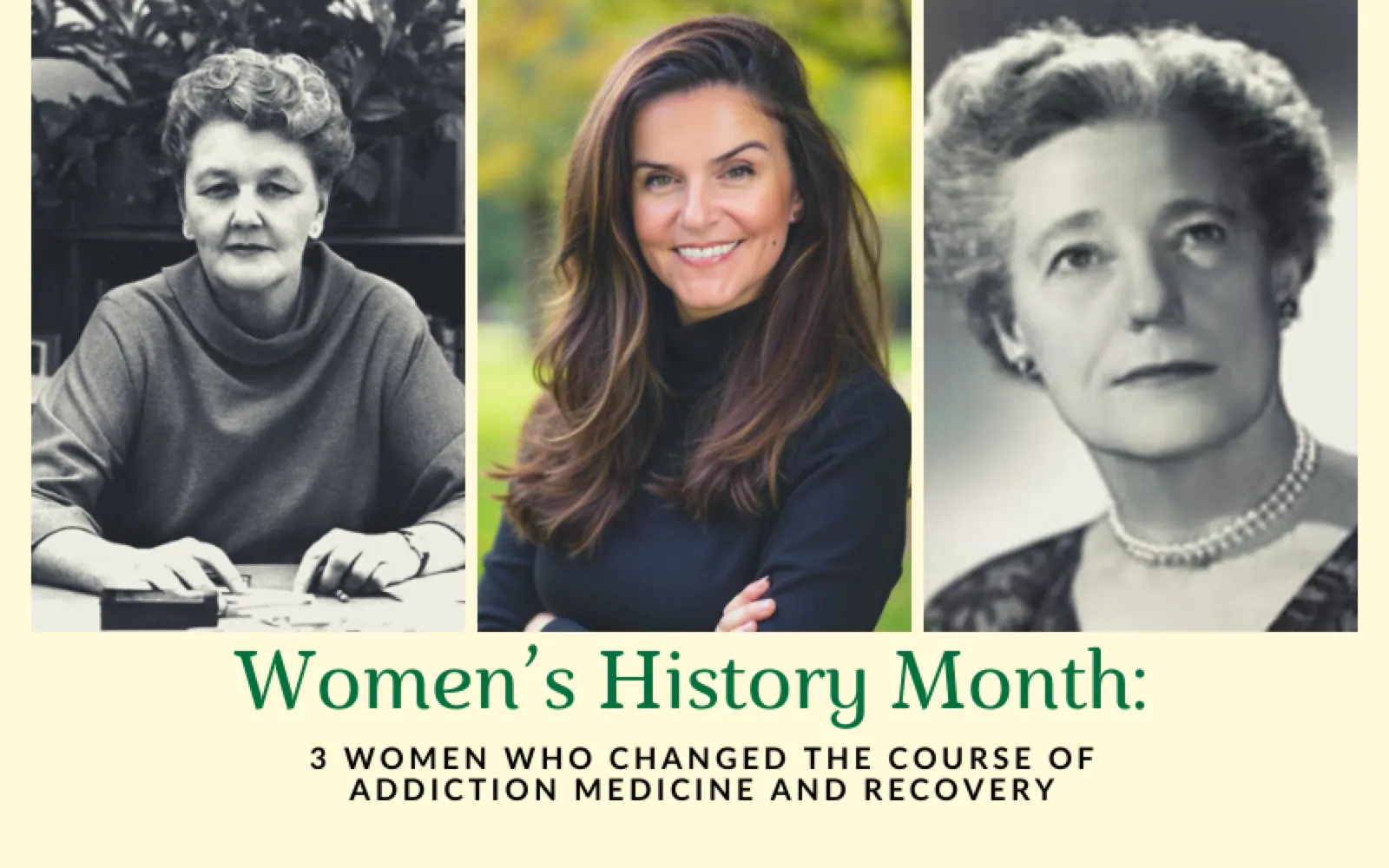
Every March, Women's History Month gives us an opportunity to recognize the women whose courage, insight, and persistence reshaped entire fields. In healthcare and addiction recovery, women have played a powerful role in how we understand treatment, compassion, and long-term healing. From pioneers who reshaped modern medicine to leaders advocating for recovery policy and community support today, women have consistently pushed the field forward, often in spaces where their voices were historically overlooked.
How Marty Mann Jumpstarted Modern Recovery Advocacy
Marty Mann's story stands out as one of the earliest and most influential voices in addiction recovery advocacy. Marty was one of the first women to publicly share her recovery from alcoholism at a time when addiction was widely misunderstood and heavily stigmatized. After struggling with alcohol use disorder herself, Mann found recovery through Alcoholics Anonymous in the late 1930s and became the first woman to achieve long-term sobriety in AA.
In 1944, Mann founded the National Council on Alcoholism. Through her advocacy, she worked tirelessly to change public perception about addiction. She pushed for alcoholism to be recognized as a treatable medical condition and encouraged people struggling with alcohol use to seek help rather than suffer in silence.
Marty Mann on Reducing Stigma and Helping Others Heal
In a speech delivered on February 1, 1947, Mann articulated her vision: "Alcoholism is a disease, and the alcoholic is a sick person." She emphasized that "the alcoholic can be helped and is worth helping" and that "alcoholism is a public health problem and therefore a public responsibility."
She drew powerful comparisons to other illnesses: "Disease can strike anyone, rich or poor, men or women. We do not punish sick people for being sick. We treat them." By speaking openly about her own experience, Mann helped reduce stigma and showed countless individuals and families that recovery is possible.
Dr. Ruth Fox and the Medical Recognition of Addiction
Women's History Month also gives us an opportunity to recognize medical pioneers like Dr. Ruth Fox, whose work helped the healthcare community better understand addiction as a disease. As a psychiatrist practicing in the mid-20th century, Dr. Fox saw firsthand how many people struggling with alcohol use disorder were misunderstood, dismissed, or simply left without proper care.
Becoming one of the early physician leaders involved with AA and working to bridge the gap between recovery communities and the medical field, Dr. Fox became the first medical director of what is now the National Council on Alcoholism and Drug Dependence in 1954. She also established the New York City Medical Society on Alcoholism, today known as the American Society of Addiction Medicine (ASAM), one of the leading professional organizations advancing addiction treatment today.
Shifting the Medical Community's Understanding of Addiction
In helping shift the medical community's understanding of addiction, Dr. Fox emphasized that people struggling with alcohol use disorder often resist the label of "alcoholic" because of stigma and misunderstanding. She advocated for reframing the conversation: instead of asking if someone is "an alcoholic," ask if they "have a problem with alcohol."
In recognition of her impact, ASAM established the Ruth Fox Scholarship, which provides full conference coverage and complimentary membership to help scholars deepen their understanding of addiction treatment advancements.
How Jessica Hulsey Is Improving Outcomes for Families
While pioneers like Marty Mann and Dr. Ruth Fox helped reshape how addiction was understood in the 20th century, modern advocates continue working to expand access to treatment and reduce stigma around substance use disorders. One voice we want to highlight is Jessica Hulsey, Founder and CEO of the Addiction Policy Forum, a nationwide nonprofit dedicated to eliminating addiction as a major health problem.
For Jessica, this work carries personal significance. As a child, her parents struggled with heroin addiction, which led to homelessness, foster care, and eventually her mother's incarceration, after which she was raised by her grandparents.
Making the Approach to Addiction More Comprehensive
Jessica began working in prevention at 15 years old through an anti-drug coalition in Southern California. Her career has included an appointment by President Bill Clinton to serve on the Drug-Free Communities Commission, a position as a legislative aide in the U.S. House of Representatives, and work to pass and fund the Second Chance Act to help individuals returning home from prison and jail.
In 2015, Jessica founded the Addiction Policy Forum to help families and patients struggling with addiction. Frustrated by the lack of progress in improving outcomes, she started the nonprofit with $13,000 from her own savings account.
When asked about making addiction treatment more comprehensive, she emphasized: "We must integrate treatment of addiction into our healthcare system." She highlighted that people who have experienced nonfatal overdose face heightened fatal overdose risk, making the Emergency Department "a critical intervention point."
Let Us Help You Begin Your Path to Recovery
At Positive Recovery Centers, our approach links the best of evidence-based treatment with novel interventions that enhance well-being by cultivating its components: positive emotions, engagement, healthy relationships, meaning, and achievement.
With convenient locations throughout Texas, Positive Recovery Centers offers a full continuum of care for substance use disorder treatment, including Medical Detox, Residential Treatment, and Sober Living. Call 713-904-4699 any time to talk through what fits.