Specialized Care · Whole-Family Programming

Family Workshops & Therapy for Addiction Recovery

Addiction is not a one-person problem. The whole family adapts around it, often without realizing it, and the whole family has to recover too. Our workshops and weekly groups are built for spouses, parents, adult children, and anyone close enough to be affected.
Call Now: 713-904-4699 Verify Insurance
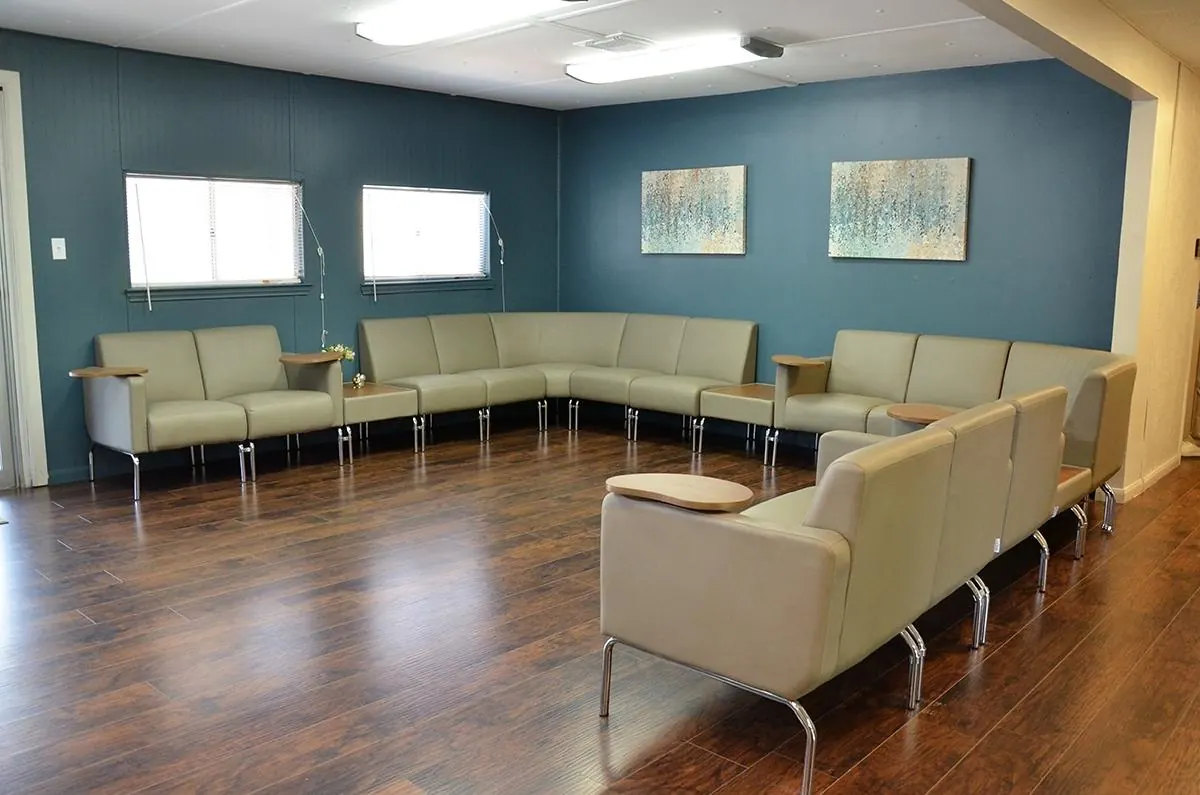
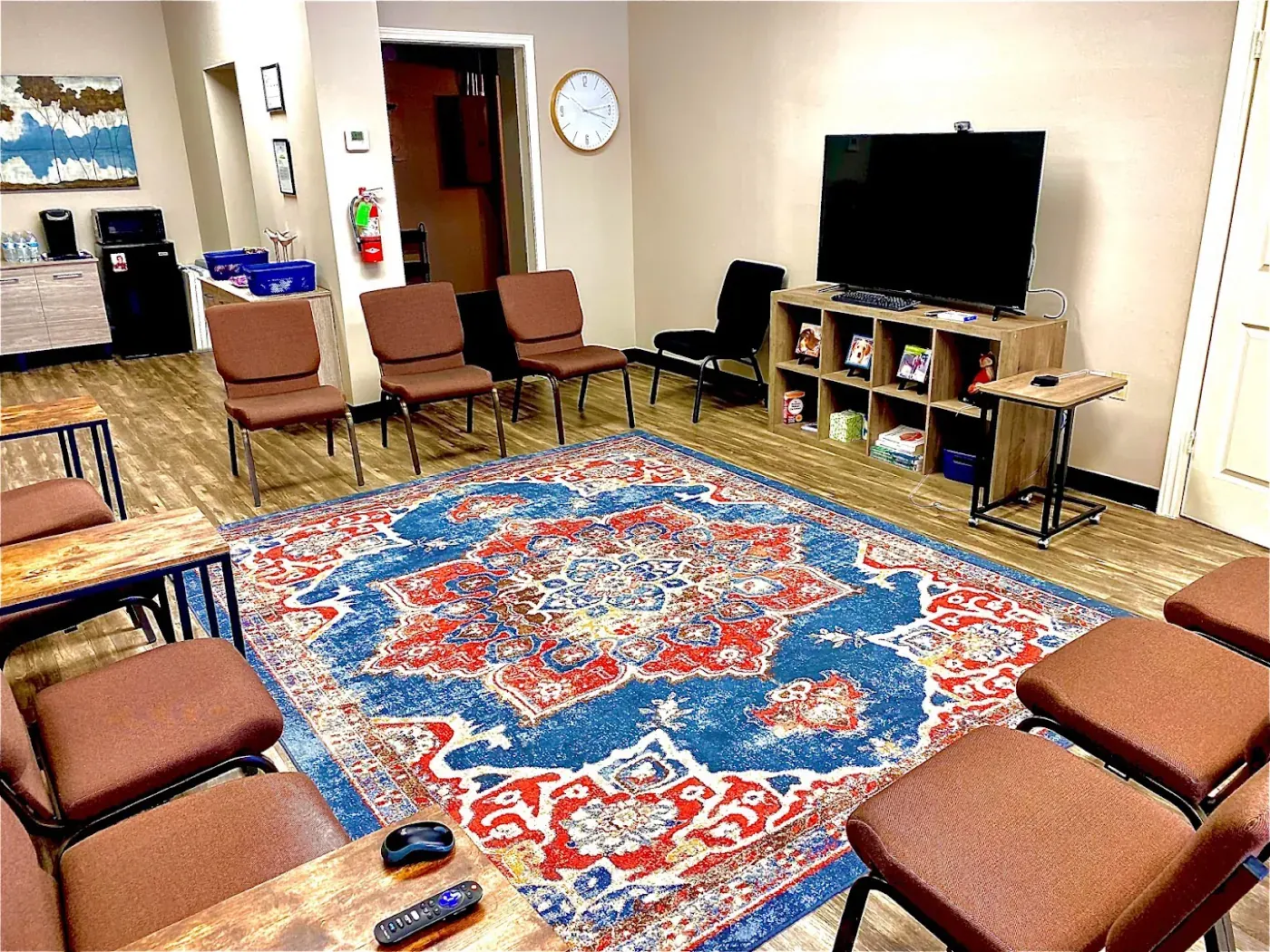
Family workshop space at Positive Recovery Centers
20+ Texas Locations Houston · Austin · DFW
Joint Commission Gold Seal of Approval
Joint Commission Gold Seal Accredited
24/7 Confidential Care Admissions any time, day or night

Does Any of This Sound Familiar?

We hear this every day.

"I'm exhausted from covering for them. And I keep doing it anyway."

"I love them. I also can't keep doing this."

"They got sober. I thought that meant we'd be okay. We're not."

"My kids saw too much. I don't know how to help them through it."

The Frame

The Whole Family Adapts Around Addiction

Living with someone's addiction reshapes everyone around it. Roles shift. Routines bend around the drinking, the using, the rage, or the silence. Over time, the family becomes a system organized around the addiction, and the people inside it stop noticing.

Dr. Stephanie Brown, a researcher whose four-stage family-recovery model is foundational in this field, describes the active-addiction stage as a dance: "The person misusing alcohol leads and family members follow in a way that keeps them dancing." Everyone has a part. Nobody chose it.

Here is what most families do not expect: when the drinking or using stops, the dance does not. Sobriety surfaces problems that the addiction was hiding. The roles everyone took on do not dissolve overnight. The communication patterns, the resentment, the trust damage, the codependency, the kids who grew up too fast: all of it is still there.

Family workshops and weekly family groups exist for that reason. They give the whole family a place to heal, alongside the person who used.

Recognition

Five Roles Families Take On

In the 1980s, Sharon Wegscheider-Cruse identified five roles family members commonly fall into when addiction takes hold. The framework is contested in the research literature, but most family members recognize themselves immediately. That recognition is the point. None of these roles are chosen, and none are failures. They are adaptations.

Role 1

The Enabler

Usually the spouse or parent. Trying to help. Trying to keep things from getting worse. Often without realizing it, makes it possible for the addiction to continue. Hides bottles, makes excuses to bosses, pays bills the addicted person should be paying.

Role 2

The Hero

Often the oldest child. Overachiever, perfectionist, the one who makes the family look fine from the outside. Carries the family's image. Stress and burnout accumulate quietly. Tends to bring this role into adulthood and relationships.

Role 3

The Scapegoat

Often the second child. Acts out. Gets in trouble. Becomes a place for the family to focus blame instead of the addiction. Is told "you are the problem." Often the most accurate observer of what is actually happening, and the least heard.

Role 4

The Lost Child

Often the third child. Quiet. Disappears into a book or a screen. Minimizes their needs to avoid adding stress. Grows up with a deep instinct to be invisible. Struggles to ask for what they need as an adult because asking never felt safe as a child.

Role 5

The Mascot

Often the youngest. Uses humor to defuse tension. The "ray of sunshine" everyone protects from the truth. Grows up with a sharp instinct for reading the room and a hard time taking themselves seriously, even when they need to.

Real families do not fit cleanly into one role. People move between roles, take on more than one, or share them. The roles are a starting point for the conversation, not a diagnosis.

The Long View

Four Stages of Family Recovery

From Dr. Stephanie Brown's developmental model of family recovery (the field's standard framework). The family moves through these stages alongside the person in treatment, on its own timeline.

STAGE 1

Active

Pre-recovery

The Family in Active Addiction

The family system has reorganized around the addiction. Roles are entrenched. Communication is filtered through what the addiction can tolerate. People do not see the dysfunction because it has become normal. There is often denial, hyper-vigilance, walking on eggshells, or hardened detachment.

STAGE 2

Transition

The shift

The Transition Stage

The person in treatment stops using. The family is suddenly in unfamiliar territory. Old roles are no longer needed but no new ones are formed. This is often more painful than active addiction because the structure that held the family together (however dysfunctional) is gone. New conflict often surfaces here. Many families mistake this for failure; it is the beginning of recovery.

STAGE 3

Early

Reconstruction

Early Recovery

Each family member starts to develop a self that exists outside the role they played during active addiction. The Hero learns to rest. The Enabler learns boundaries. The Scapegoat is heard. New communication patterns are practiced, often clumsily at first. This is the longest stage and the most uncomfortable.

STAGE 4

Ongoing

A new normal

Ongoing Recovery

A new family identity stabilizes. Roles are healthier and chosen rather than imposed. Conflict still happens; it just no longer pulls the family back into the old system. This stage is open-ended and continues for years. Many families say this is where they finally feel like a family again, not just a system organized around someone else's struggle.

Source: Stephanie Brown, PhD & Virginia Lewis, PhD, The Alcoholic Family in Recovery: A Developmental Model (Guilford Press).

Family workshop space at Positive Recovery Centers

In Practice

What You'll Find at a PRC Workshop

Two parallel formats run at every PRC location. Pick the one that fits where you are, or do both.

Weekly Family Groups

For families whose loved one is currently in PRC treatment. Bundled into the cost of the primary program at no extra charge. Weekly cadence, led by a licensed clinician, integrated with the clinical work happening in the rest of the program.

Open Family Workshops (Every 3 Weeks)

Open to anyone affected by a loved one's addiction. You do not need to be related to a current PRC client. Extended family, blended families, friends, community members are all welcome. Call 713-904-4699 for the current workshop schedule and cost.

Both formats blend educational lectures, experiential therapy, group processing, and wellness practices like yoga and meditation. The clinical philosophy is consistent: the family does not just need information; it needs to do the work in the room with other families doing the same.

Positive Recovery Commitment Program

Our Commitment to You

The Private Pay Promise

Complete your loved one's treatment program and follow discharge recommendations. If they relapse within a year, return once for stabilization at no additional cost.*

Learn About Our Commitment Program

If Your Loved One Needs More

Related Programs

Where We Treat

Treatment Locations Across Texas

Family workshops and weekly family groups run at our outpatient clinics across Texas. Start at our Houston treatment locations, our Dallas-Fort Worth treatment locations, or our Austin and Hill Country treatment locations, or browse all 20+ Positive Recovery locations to find the clinic closest to you.

You Don't Have to Decide Alone

Whether your loved one is in treatment with us, has been before, or is still struggling, and whether you are the spouse, the parent, the adult child, or somewhere else in the system, there is a workshop for you. Confidential, supportive, and led by clinicians who do this work every day.

Call 713-904-4699 Verify Insurance