Table of Contents
There are moments in life that change everything, moments that leave families searching for answers, for support, and for a way forward. For those impacted by substance use disorder and overdose, the journey is often marked by both profound grief and an overwhelming sense of isolation. Yet within that pain, there is healing. This is where grief becomes connection and healing after addiction loss.
Across communities, individuals are coming together to turn personal loss into meaningful action, raising awareness, supporting families, and working to prevent others from experiencing the same heartbreak. Through education, compassion, and advocacy, they are not only addressing the realities of addiction but also creating spaces where hope, remembrance, and healing can coexist, which is exactly what organizations like M-COPE strive to do for families who have experienced loss from addiction.
Turning Pain into Purpose: How M-COPE is Fighting Against Substance Use Disorder and Overdose Through Education, Awareness, Prevention, and Remembrance
In this conversation, host Julie DeNofa sits down with Kathy Posey, Paige Butler, and Kim Robbins, three inspiring women serving on the Montgomery County Overdose Prevention Endeavor Board (M-COPE)
Kathy and Kim, Co-Founders of M-COPE, share their personal stories of losing a child to addiction and how, after four moms met through the GRASP grief group ( Grief Recovery After Substance Passing) after losing their children to accidental overdose, they realized the need for spreading awareness around the disease of addiction.
Paige also shares her journey through a different perspective of loving a child who is now in recovery from substance use disorder. With their stories, Kathy, Paige, and Kim are now turning their pain into purpose in helping other families heal.
The mission at M-COPE is to collaborate with individuals, communities, schools, and organizations to raise awareness about substance use disorder and the alarming rise in overdose and drug-related deaths in Montgomery County and surrounding areas. Their efforts are grounded in four key pillars: education, awareness, prevention, and remembrance.
Through this approach, they shine a light on the growing drug crisis, work to end the stigma surrounding substance use, and advocate for those currently in need of support as well as for those who can no longer speak for themselves.
Tap the link below to listen on Spotify!
Get to Know Our Guests
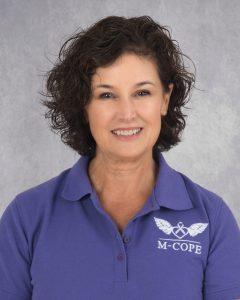
Kathy Posey, Founder and Board Member –
Kathy Posey is one of the founders and board members of M-COPE. After losing her oldest son, Josh, at the age of 23 to an overdose, their family was left with a devastating loss and a broken heart that will never fully mend. A couple of days after Josh passed, a friend gave her the book “When a Child Dies from Drugs: Practical Help for Parents in Bereavement”.
From that, she learned about a national non-profit organization called GRASP (Grief Recovery After Substance Passing) and followed their Facebook page. Although she was surrounded by supportive friends, no one can truly understand the pain of losing a child or any loved one to substance use if they haven’t experienced it firsthand. They considered themselves an average family until suddenly they spent 5 years in the most unimaginable scenarios, constantly afraid for their child’s life.
After going to an in-person GRASP meeting in Houston, Kathy decided to step out of her comfort zone and start and facilitate a chapter in The Woodlands. The first meeting was in March of 2020, and they had 17 people in attendance! Since that time, they’ve had a steady number of people attend the bi-monthly meetings.
From this GRASP group, 4 Mothers came together and decided they couldn’t let the loss of their boys be in vain. They chose to start M-COPE and hold annual events to bring Prevention, Education, Awareness, and Remembrance to their community and to help as many people as they could avoid the loss they have felt.
Her goal through M-COPE is to bring attention to this increasing drug epidemic, educate students and parents on the most current drug information, and to provide events to help families get needed information to navigate their journey, and to let people know that they are NOT ALONE!
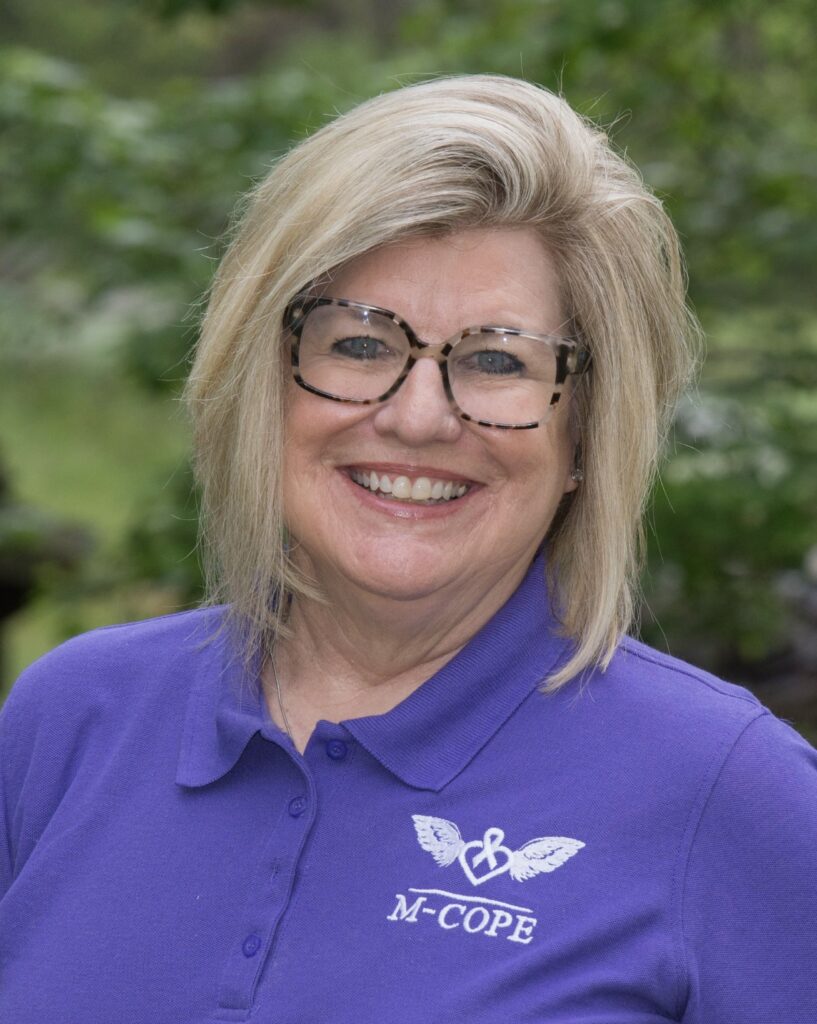
Paige Butler, Board Member
Paige Butler, is a mother to two awesome daughters, one in recovery from substance use disorder. She and her husband also raise their amazing 10-year-old grandson. Paige is a Gigi to four grandsons now. Paige also co-founded the local non-profit Mosaics of Mercy when her oldest grandson was a baby to help families in finding resources for mental health and substance abuse.
Paige also started the Grandmothers Raising Grandchildren support group that meets in The Woodlands and the noon Nar-Anon meeting that also meets in The Woodlands. She believes that “if you can’t find a resource you need and at the time you need it, be a part of creating it”.
She has since retired a few years ago from Mosaics and has been actively serving M-Cope as an advisor and on its Board of Directors. She loves being a Hope Dealer for another non-profit, Rock Bottom Hope. Helping families stay healthy in the midst of the substance abuse of a loved one is her passion.
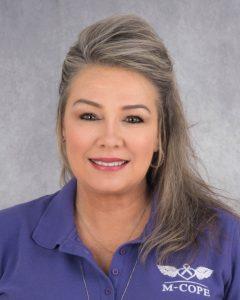
Kimberly Robbins, Founder and Board Member –
Kim Robbins is one of the founders and an active Director of M-Cope, where she also serves as the volunteer coordinator and is deeply committed to spreading awareness and education around substance use in her community.
Her work is rooted in lived experience—after losing her youngest son, Stephen, at the age of 24, to an accidental overdose in 2019, Kim turned her grief into purpose by helping support families and reduce stigma through connection and advocacy.
Kim is married, the proud mother of two other grown children, Andrew and Brandi, who live close by, and a proud Gigi to Cayson, Cole, and Addi. By day, she brings over three decades of Revenue Cycle Leadership experience from her career at a local non-profit hospital, and by heart, she remains dedicated to ensuring no family feels alone.
Where Grief Becomes Connection
One of the most powerful themes throughout this conversation is the importance of connection, especially in moments of deep grief and uncertainty. Whether someone is navigating the loss of a loved one or walking alongside someone in active addiction, isolation can make everything feel heavier. However, when we people who have shared experiences, this is where grief becomes connection.
Paige Butler speaks directly to this, sharing, “Don’t be alone. Don’t isolate if you can. Find your people… You need to really work on yourself and heal. And I found that my family started to heal once I did.” Healing often begins when we step out of isolation and into spaces where we are understood, supported, and reminded that we don’t have to carry everything on our own.
Understanding Grief, Triggers, and Giving Grace
Grief is not linear, and it’s not the same for everyone. Kathy Posey reminds us that “everybody grieves differently… we all feel things at different times and feel different things,” a truth that can bring much-needed perspective within families navigating loss together.
Julie DeNofa expands on this, explaining that grief comes in waves and “sometimes they’re soft and gentle… sometimes they’re a little bit more forceful, and they almost knock you over. There is no timeline, no ‘pain meter,’ and no clear moment when grief simply disappears.” Instead, healing becomes about learning to move with those waves, offering ourselves and others grace in the process.
Our pain and experiences are real, and it’s important to remind ourselves that we are human and to allow these emotions to come and go. And to give ourselves grace when we might be feeling various emotions at once. It’s important not to bottle them up and to find support, whether from a friend, a community, or a professional. And no matter how you might be feeling in this very moment, know that there is purpose after addiction loss. Your story might be someone else’s story, too, and when we’re honest about where we’re at, we can help others with their journey, too.
Turning Awareness into Action in the Community
While grief is deeply personal and affects everyone differently, the work being done through M-COPE shows how it can also become a catalyst for meaningful change. As Kathy shared, “we had to find some type of purpose in the pain… and try to keep other families from having to deal with that.” That purpose now lives on through outreach efforts like Narcan distribution, blessing bags, and community education.
Paige highlights the urgency behind this work, noting that while overdose deaths may be decreasing, overdoses themselves are not, making access to life-saving resources critical. At the heart of these efforts is a simple yet powerful message: “You matter to somebody. We care.” Through awareness, prevention, and compassion, M-COPE is helping save lives and reminding people they are not alone in their journey. Their work is where grief becomes connection and healing after addiction loss.
Enjoyed This Conversation? There’s Plenty More Like It!
If you loved this conversation about learning to navigate grief after overdose loss, understanding emotional triggers and grief waves after loss, and how overdose awareness and prevention efforts are helping communities, you can listen to the full episode with M-COPE here.
Want access to more Positive Recovery MD podcasts? We have plenty more episodes just like this one!
Subscribe today wherever you listen to your favorite shows – tap this link to find your preferred channel and check out more episodes like this one!